20 Day Victoria Falls to Cape Town Tour (Premier)
Overview Itinerary Departure Dates Activities Inclusions & Exclusions

20 Day Victoria Falls to Cape Town Tour (Premier)

20 Day Victoria Falls to Cape Town Tour (Premier)
5544.00
Tour Type Icon

Price From

R5,544

Price Disclaimer: Tour is Priced USD 5544 (July – Dec)

Single Supplement USD 1082

Local Payment R4200

Next Year Tour Priced USD 5940 (Jan – June) | USD 6336 (July – Dec)

Next Year Single Supplement USD 1060

Next Year Local Payment R4200

Price fluctuations occur based on the time of travel. For more information please speak to your travel consultant

check availability View Tour Dates

*Currency estimated. Tours are Based in South African Rand (ZAR) and converted on the day. Some Tours are Based in EUR/USD

Latest
2025 Tripadvisor Travelers Choice:
Best Travel Company for Adventure Holidays

review.io

USD

https://schema.org/InStock

Calendar

Length

20 days

Tour Type

Tour Type

Smaller Group Safari Tours, Accommodated

flight Starts

Starts

Victoria Falls

Comfort Level

Comfort Level

Premier

Flight Ends

Ends

Cape Town

Age Range

Age Range

10 - 65 and Above

Tour SKU

Tour SKU

ACS1019

Operated in

Operated in

English Guided

Group Size

Group Size

Min 4 Max 16

LET THE EXPERTS HELP

EXTEND MY TOUR

What are you looking for?

Get advice and suggestions to make this your perfect trip.

or call us on:

+27 (0) 21 448 0997

Why You'll Love this Tour

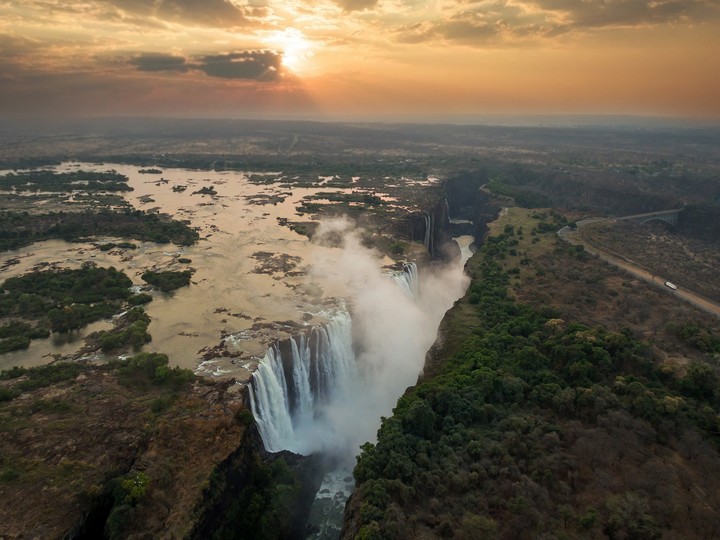
Unleash the wonders of Southern Africa on this epic 20 day adventure! Witness the thundering majesty of the mighty Victoria Falls and embark on a wildlife extravaganza through the Chobe National Park. Trek through the vast, ochre sands of the Kalahari Desert and glide across the waterways of the Okavango Delta on a mokoro. On this tour you will also scale the towering red dunes of Sossusvlei in the Namib Desert, witness the explosion of color in Namaqualand and explore the vibrant Mother City, Cape Town.

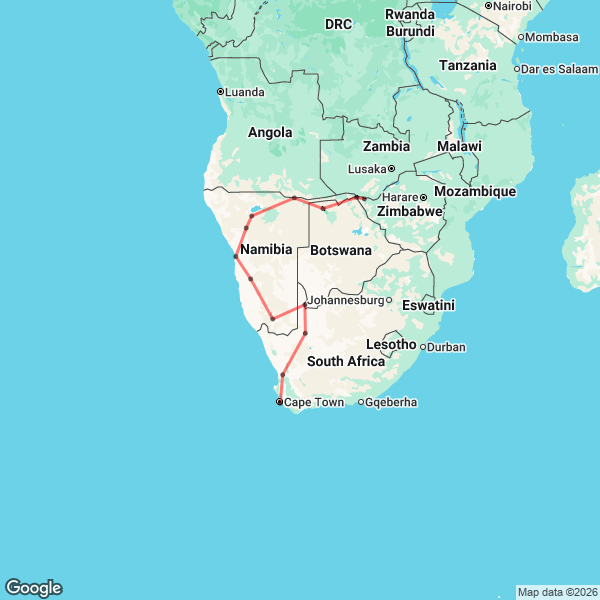
Route on Map

20 Day Victoria Falls to Cape Town Tour (Premier) Map
Download Full Itinerary

Itinerary Download

"*" indicates required fields

Full Name*

ITINERARY

Expand All
20 Day Victoria Falls to Cape Town Tour (Premier)
["Most Popular","Solo Travellers","Couples","Families","Friends","Seasoned Travellers","Honeymoon","Groups"]
P20D
14
1

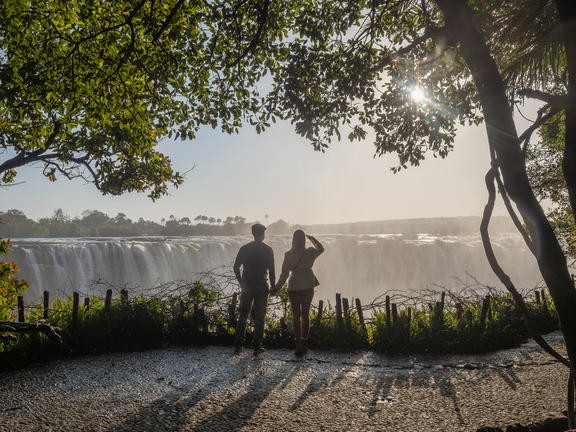
Your adventure starts with an airport transfer to Victoria Falls, one of Africa’s most spectacular sights. .You have the option to see Victoria Falls that afternoon, which is unquestionably one of Africa’s most amazing vistas. Before leaving for Chobe the next morning, you have free time to explore the local markets and take advantage of the various optional activities available in the African adrenaline capital.


Accommodation
Accommodation

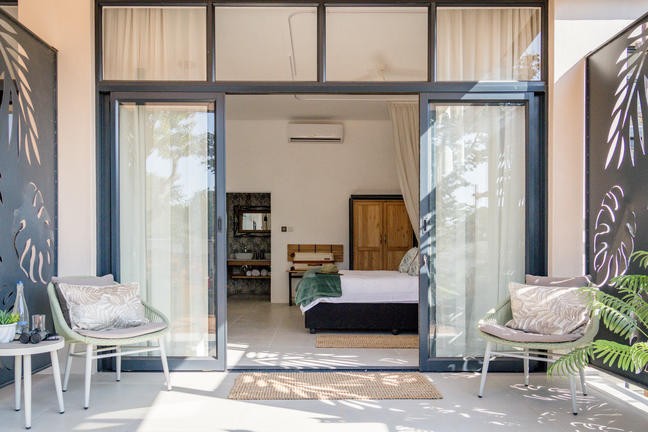
Waterfalls Lodge or similar

Meals
Meals

Dinner will be at your own expense

Optional Activities
Optional Activities

Browse local markets, Sunset Cruises, Scenic Flights over the falls, Visit to the Falls

2

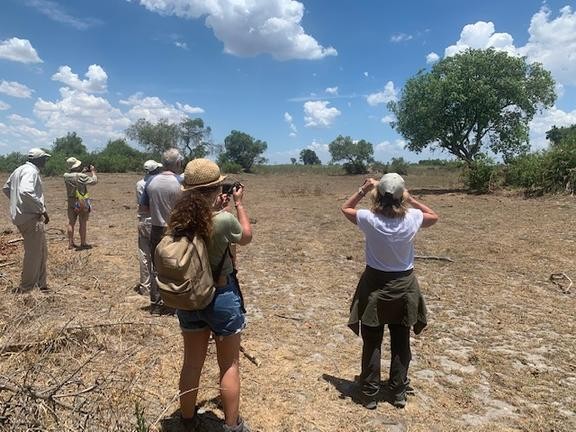
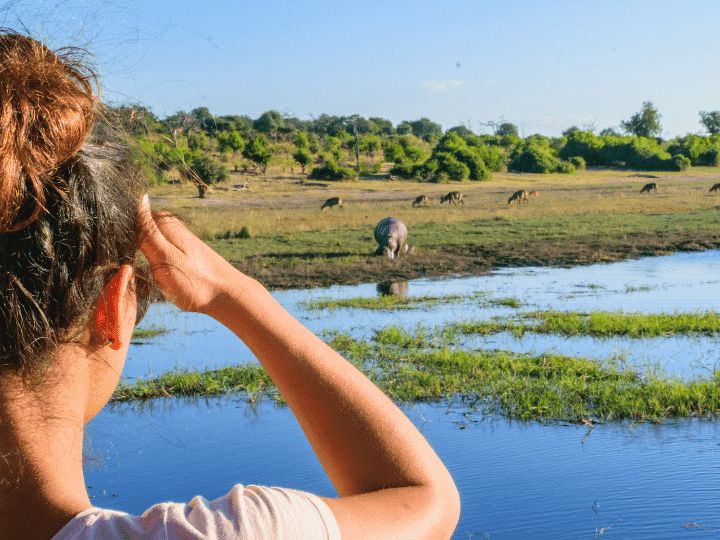
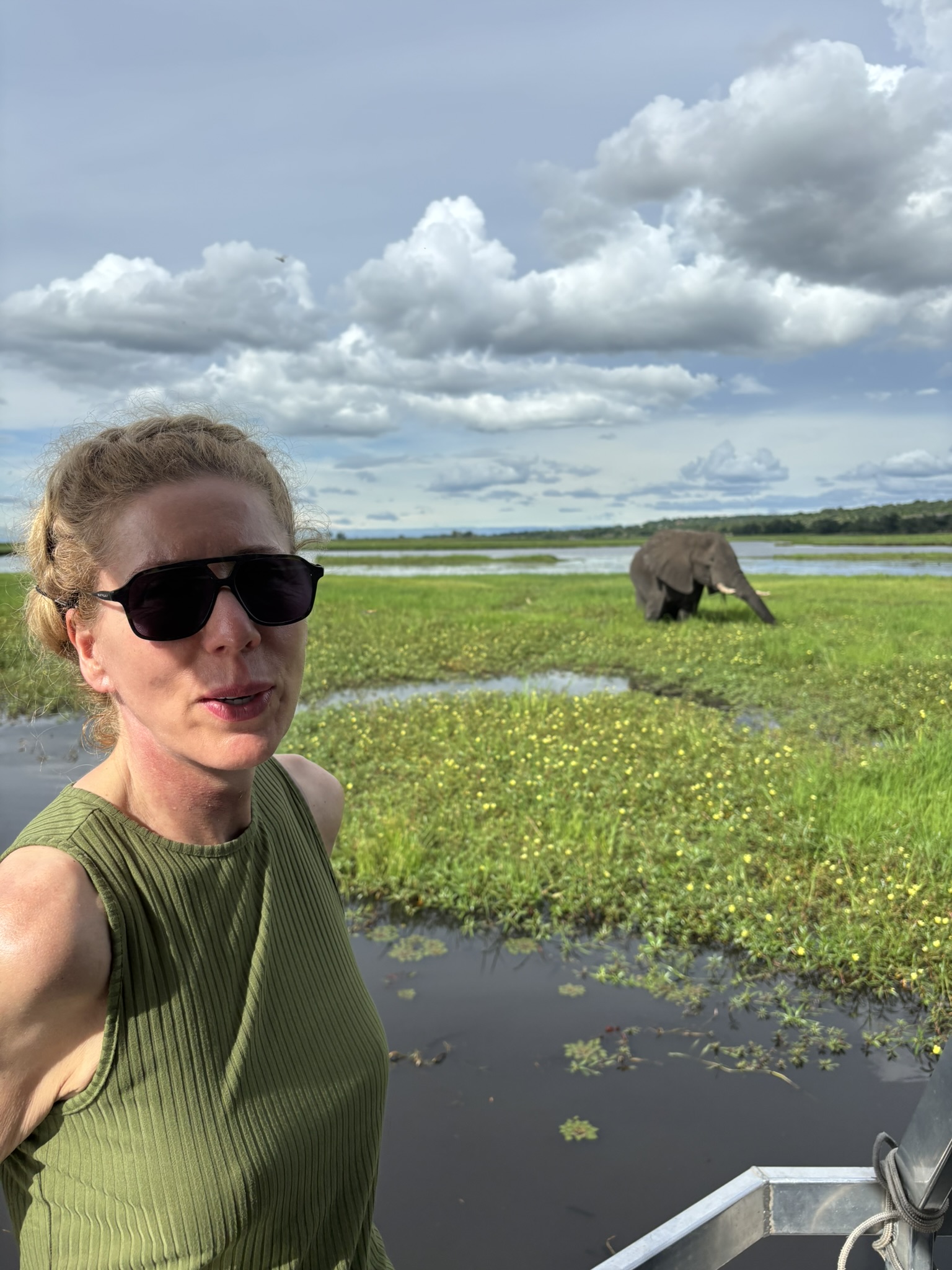
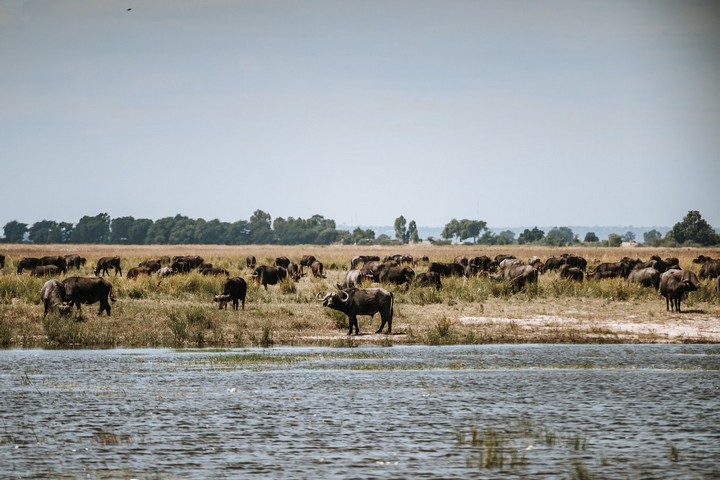
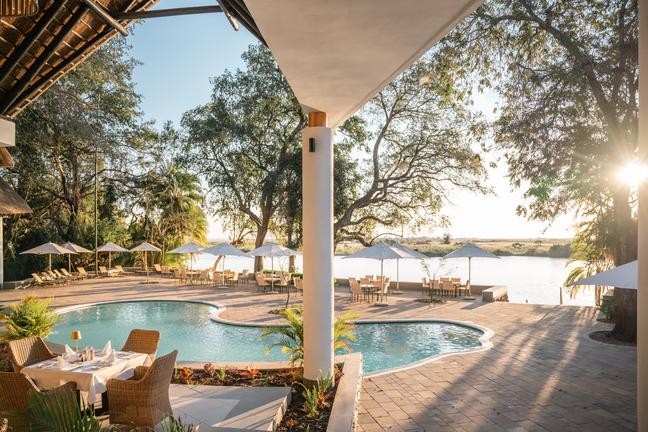
We spend the night on the banks of the Chobe River after crossing into Botswana. Chobe is well-known for its breathtaking landscapes, golden sunsets, and profusion of wildlife and birds. We unwind with a wildlife drive in the morning and a Chobe River game-viewing cruise in the evening.


Accommodation
Accommodation

Chobe Safari Lodge or similar (2 Nights)

Meals
Meals

Breakfast, Dinner

Included Highlights
Included Highlights

Chobe National Park 4×4 Morning Game Drive, Sunset Cruise on the Chobe River

3

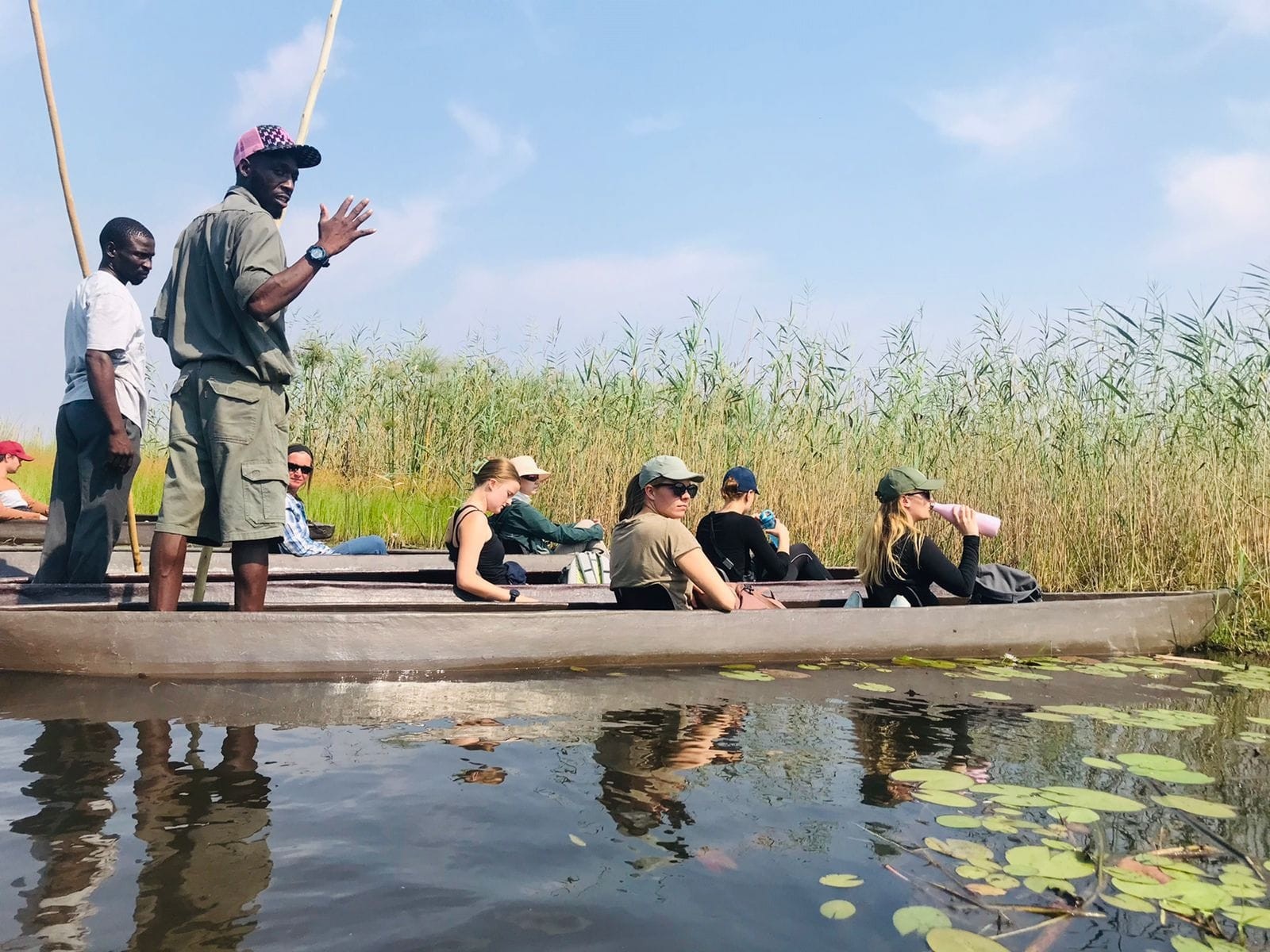
After game spotting in Chobe National Park, traverse Namibia and enter eastern Caprivi. Cross the border and reach the edge of the Okavango Delta. The next day, a boat whisks you into the Delta’s heart for mokoro adventures and wildlife encounters on the Nxamasire’s hidden waterways. Water levels permitting, thrilling game walks await on secluded islands!

Accommodation
Accommodation

Swampstop Chalets or Meru tents (2 Nights)

Meals
Meals

2 x Breakfast, Lunch, 2 x Dinner

Included Highlights
Included Highlights

Okavango Delta – Mokoro and Boat Excursions, Game walks in the Delta

4

We leave the Delta and re-enter Namibia. We proceed across the Caprivi Strip, where we spend the night surrounded by opulent vegetation with a view of Angola and the Okavango River.

Accommodation
Accommodation

Hakusembe River Lodge or similar (1 Night)

Meals
Meals

Breakfast, Dinner

5

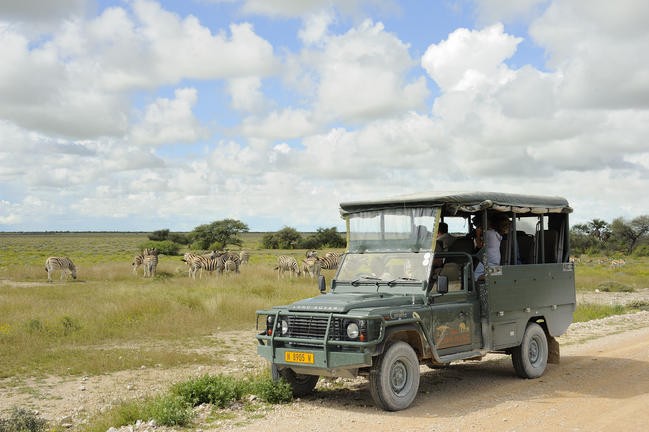
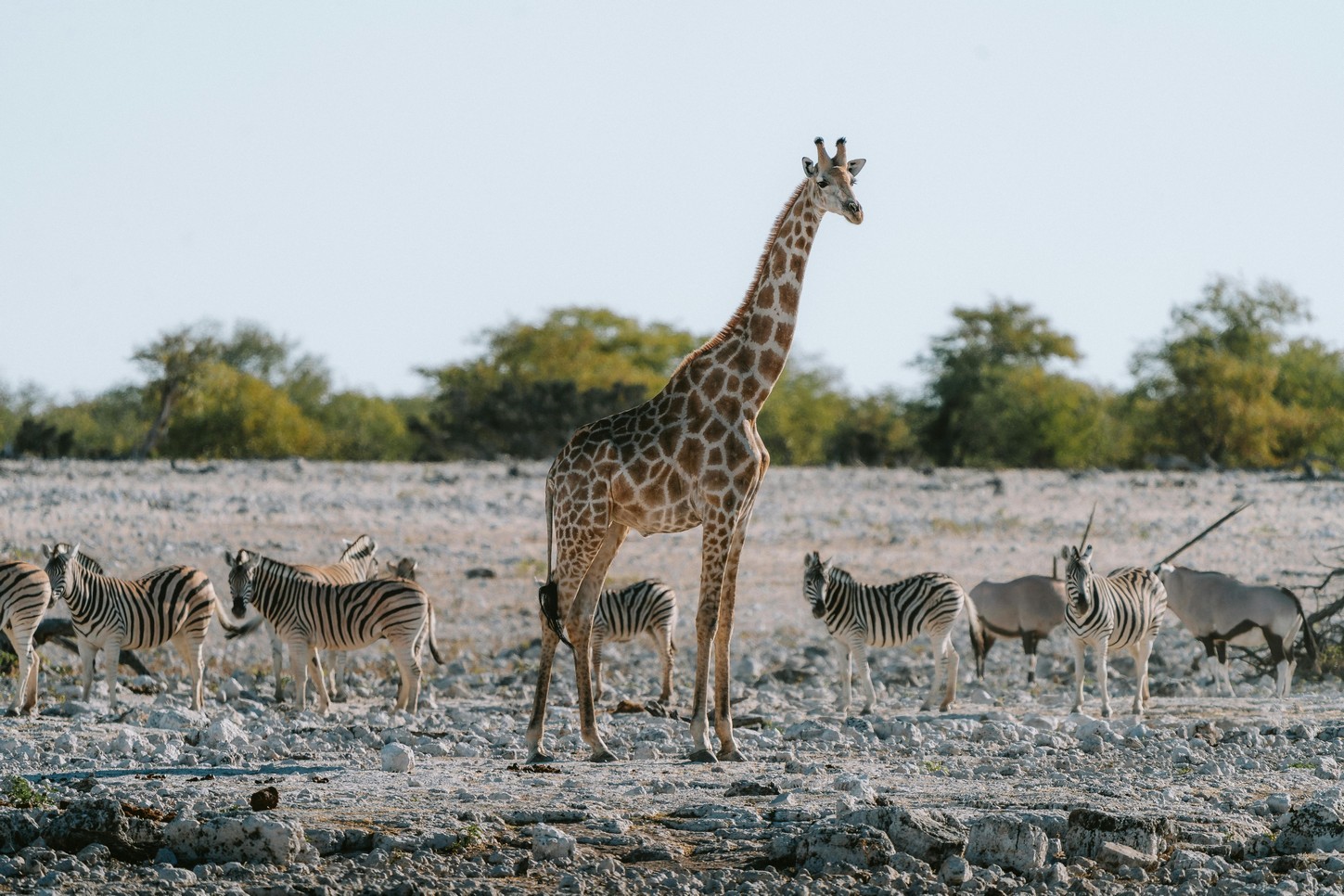
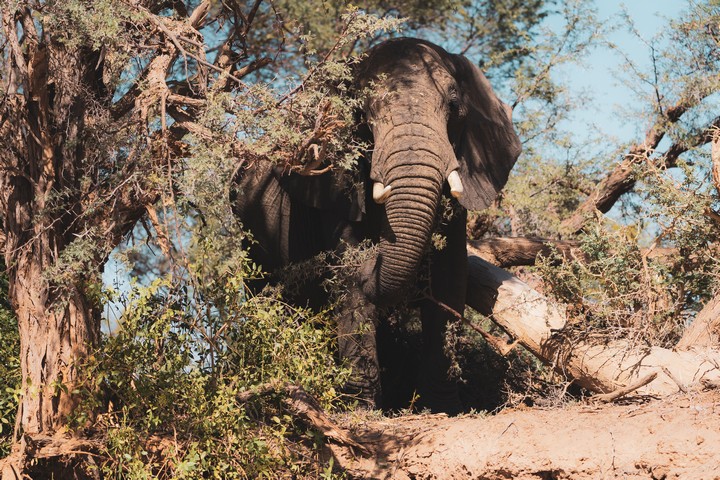
Our next stop is Etosha National Park, one of Africa’s premier wildlife reserves. This vast sanctuary is home to a diverse array of animals, including blue wildebeest, springbok, zebra, kudu, giraffe, cheetah, leopard, lion, and elephants. The next day we’ll embark on a full-day game drive in open 4×4 vehicles, departing directly from our lodge, conveniently located just outside the park gate.

Accommodation
Accommodation

Etosha Village or similar (2 Nights)

Meals
Meals

Breakfast, Dinner

Included Highlights
Included Highlights

Etosha National Park Full Day Game Drive in open 4×4 vehicles

6

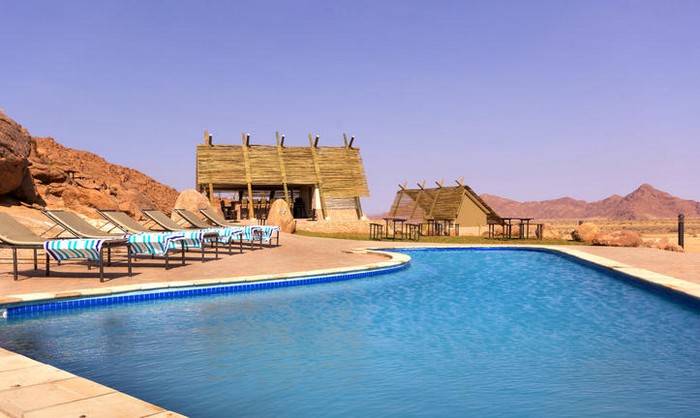
We drive the truck into the Park and enjoy a morning game drive. Next, we head to Damaraland, one of Namibia’s most picturesque regions, which is characterized by enormous granite koppies, steep gorges, and ancient water courses with vast meadows and grasslands. Perched on a mountain, our lodge offers breathtaking views of the surroundings. Take in the breathtaking scenery or just unwind by the pool throughout the day.

Accommodation
Accommodation

Ugab Terrace Lodge or similar (1 Night)

Meals
Meals

Breakfast, Dinner

Included Highlights
Included Highlights

Etosha National Park Morning Game Drive, Damaraland

7

We travel through the huge and harsh Damaraland region as we head south. Wide gravel plains break up its mountain ranges, flowing into hot, arid valleys and sandy, vegetated riverbeds. After arriving, we spend the afternoon touring the German colonial town of Swakopmund.


Accommodation
Accommodation

The Delight or similar (1 Night)

Meals
Meals

Breakfast

Included Highlights
Included Highlights

Swakopmund

8

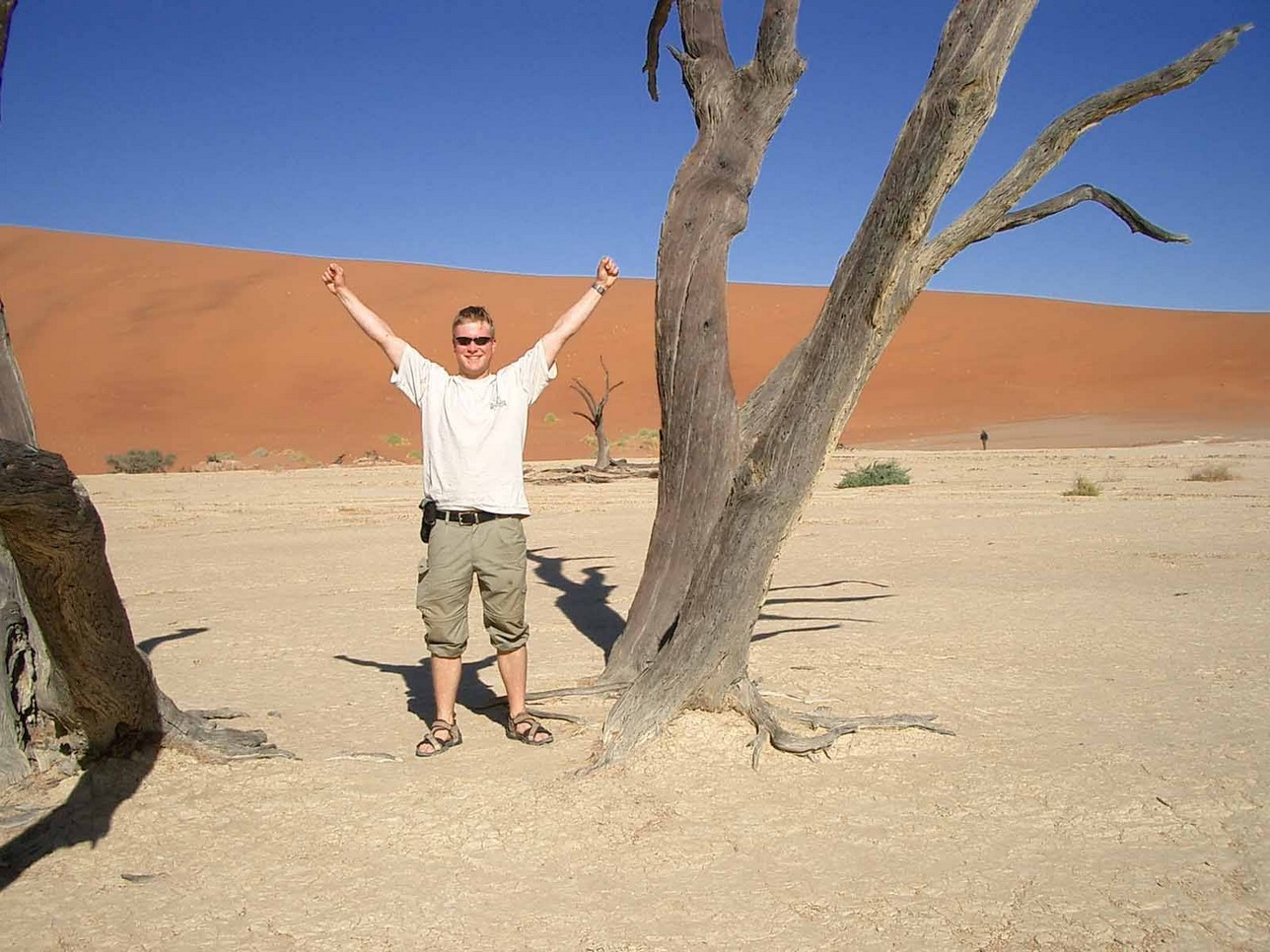
We travel south through breathtaking countryside to our lodging, which is situated right on the edge of the Namib Desert. The next morning, we head out early to Sossusvlei, making a halt in the dune belt to see the world’s tallest sand dunes’ changing hues. We walk to Sossusvlei and Deadvlei, which are 5km apart followed by a quick stroll in Sesriem Canyon in the afternoon.

Accommodation
Accommodation

Desert Quiver Camp or similar (2 Nights)

Meals
Meals

Breakfast, Dinner

Included Highlights
Included Highlights

Sossusvlei and Deadvlei, Sesriem Canyon

9

We traverse a diverse array of landscapes before arriving at our lodge, nestled in a truly breathtaking setting. Later that afternoon, we’ll explore the Fish River Canyon, one of the largest and most awe-inspiring gorges in the world.


Accommodation
Accommodation

Canyon Village or similar (1 Night)

Meals
Meals

Breakfast, Dinner

Included Highlights
Included Highlights

Fish River Canyon

10

We journey into the spectacular Kgalagadi Transfrontier Park and the heart of the Kalahari. With a land area of more than 3.6 million hectares, this reserve is among the biggest in Africa. Excellent predator sightings, especially those of the renowned black mane lion, are regular due to the area’s scant vegetation. We take pleasure in early and late-day game drives within the park.

Accommodation
Accommodation

Kgalagadi Lodge or similar (2 Nights)

Meals
Meals

Breakfast, Dinner

Included Highlights
Included Highlights

Kalahari Desert, Morning and Afternoon Game Drives in the Kgalagadi Transfrontier Park

11

On our way to Augrabies Falls National Park, where the powerful Orange River plunges 56 meters into the valley below, we travel through a verdant oasis region with a profusion of wine fields. These magnificent falls are known locally as “Aukoerebis,” which translates to “place of great noise.” We appreciate the falls from a variety of vantage points throughout the afternoon.

Accommodation
Accommodation

Kakamas Hotel or similar (1 Night)

Meals
Meals

Breakfast

Included Highlights
Included Highlights

Augrabies Falls National Park

12

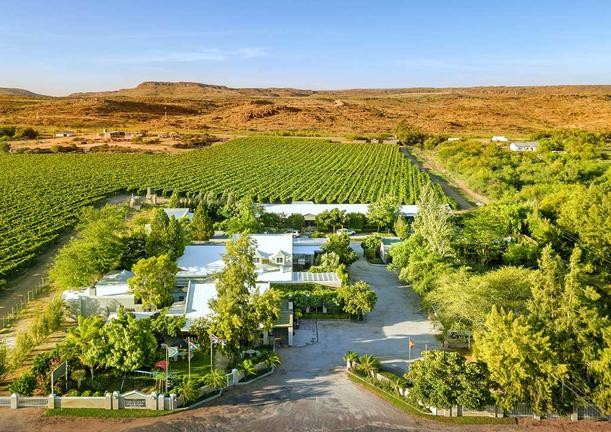
After passing through the scenic Namaqualand area, we spent the night at the base of Van Ryns Pass. Because to the abundance of wild flowers in the area, the landscape is turned into an explosion of color from August until October. The Guesthouse offers the chance to taste some of the region’s wines during a wine tasting (own expense).

Accommodation
Accommodation

Highlanders Guesthouse or similar (1 Night)

Meals
Meals

Breakfast, Dinner

Included Highlights
Included Highlights

Scenic drive to Namaqualand

Optional Activities
Optional Activities

Wine Tasting at Guesthouse

13

After crossing the breathtaking Van Ryns Pass, we reach Cape Town in the middle of the afternoon. With its stunning backdrop of Table Mountain, Cape Town is home to a variety of historical, cultural, and scenic sites. We leave the hotel at 8:00 a.m. for a tour of the peninsula. We visit the Table Mountain National Park at Cape Point after traveling along the Atlantic coast past Hout Bay and Chapmans Peak. We then head back to our conveniently located Waterfront hotel along the Indian Ocean shore. Included is a cable car ride up Table Mountain in the morning or afternoon, depending on the weather. Clients are responsible for paying for dinners at the lively Waterfront.

Accommodation
Accommodation

Breakwater Lodge or similar (2 Nights)

Meals
Meals

Breakfast

Included Highlights
Included Highlights

Peninsula Tour, Chapmans Peak Drive, Table Mountain, Table Mountain Cable Car

Optional Activities
Optional Activities

Dinner at Waterfront

14

Your journey comes to an end after breakfast

Meals
Meals

Breakfast

UPCOMING DEPARTURE DATES

Saturday

11 Jul 2026

Thursday

30 Jul 2026

From

R5,544

Saturday

25 Jul 2026

Thursday

13 Aug 2026

From

R5,544

Saturday

22 Aug 2026

Thursday

10 Sep 2026

From

R5,544

Sold Out

Saturday

19 Sep 2026

Thursday

08 Oct 2026

From

R5,544

Sold Out

Saturday

26 Sep 2026

Thursday

15 Oct 2026

From

R5,544

Saturday

03 Oct 2026

Thursday

22 Oct 2026

From

R5,544

Saturday

31 Oct 2026

Thursday

19 Nov 2026

From

R5,544

Monday

14 Dec 2026

Saturday

02 Jan 2027

From

R5,544

Saturday

06 Feb 2027

Friday

26 Feb 2027

From

R5,940

Saturday

20 Mar 2027

Friday

09 Apr 2027

From

R5,940

Saturday

17 Apr 2027

Friday

07 May 2027

From

R5,940

Saturday

01 May 2027

Friday

21 May 2027

From

R5,940

Saturday

29 May 2027

Friday

18 Jun 2027

From

R5,940

Saturday

05 Jun 2027

Friday

25 Jun 2027

From

R5,940

Saturday

03 Jul 2027

Friday

23 Jul 2027

From

R6,336

Saturday

10 Jul 2027

Friday

30 Jul 2027

From

R6,336

Saturday

07 Aug 2027

Friday

27 Aug 2027

From

R6,336

Saturday

14 Aug 2027

Friday

03 Sep 2027

From

R6,336

Saturday

21 Aug 2027

Friday

10 Sep 2027

From

R6,336

Saturday

25 Sep 2027

Friday

15 Oct 2027

From

R6,336

Saturday

02 Oct 2027

Friday

22 Oct 2027

From

R6,336

Saturday

09 Oct 2027

Friday

29 Oct 2027

From

R6,336

Saturday

06 Nov 2027

Friday

26 Nov 2027

From

R6,336

Monday

13 Dec 2027

Sunday

02 Jan 2028

From

R6,336

Included in the Tour Price:

  • Chobe National Park 4×4 Morning Game Drive
  • Sunset Game Viewing cruise on the Chobe River
  • The Kavango River
  • Okavango Delta – Game Walks, Mokoro Rides and Boat Excursions
  • Caprivi
  • Etosha National Park – Full Day and Morning Game Drive
  • Damaraland
  • Swakopmund
  • Sossusvlei, Deadvlei
  • Hike through the Sesriem Canyon
  • Fish River Canyon
  • Kalahari Desert and Kgalagadi Transfrontier Park Game Drives
  • Augrabies Falls National Park
  • Scenic Beauty of the Namaqualand region
  • Cape Town – Peninsula Tour (Cape of Good hope) and Table Mountain

Optional Activities available on this tour at your own expense

  • Helicopter flights over the falls
  • Visit the falls
  • Wine Tasting at the Guesthouse in Namaqualand
  • Dinner at Waterfront

INCLUSIONS AND EXCLUSIONS

Expand All
  • Meals – 20 Breakfasts, 1 Lunch, 14 Dinners
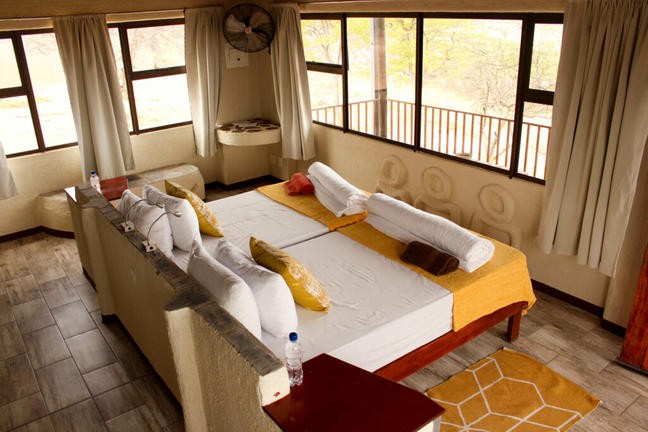
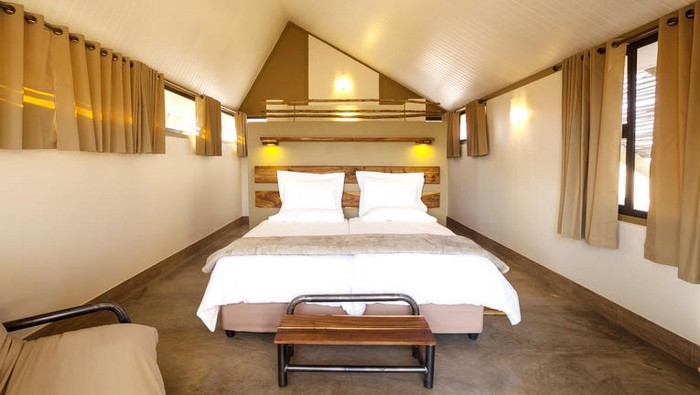
  • Accommodation – 19 Nights Lodge, Chalet and Small Hotel all with en-suite facilities
  • Transport – Overland Vehicle
  • 2 Experienced Crew
  • National Park entrance fees
  • Meals not shown will be to the clients account
  • Chobe National Park 4×4 Morning Game Drive
  • Sunset Game Viewing cruise on the Chobe River
  • The Kavango River
  • Okavango Delta – Game Walks, Mokoro Rides and Boat Excursions
  • Caprivi
  • Etosha National Park – Full Day and Morning Game Drive
  • Damaraland
  • Swakopmund
  • Sossusvlei, Deadvlei
  • Hike through the Sesriem Canyon
  • Fish River Canyon
  • Kalahari Desert and Kgalagadi Transfrontier Park Game Drives
  • Augrabies Falls National Park
  • Scenic Beauty of the Namaqualand region
  • Cape Town – Peninsula Tour (Cape of Good hope) and Table Mountain
  • Flights
  • Travel insurance (Get Adventure Travel Insurance)
  • Airport taxes
  • Visa costs
  • Optional excursions
  • Drinks
  • Mineral water
  • Gratuities and Personal expenses
  • Meal not mentioned at own expense

Other information

Local Park Fee and Activity Payment

This amount needs to be paid in cash to our guide on day one of the tour. Please make sure you are aware of this payment. These amounts are kept low to avoid guides having to carry large amounts of cash with them on back to back tours. This cash will be used directly as trip funds and goes straight to the local providers.

Accommodation and Camping Equipment

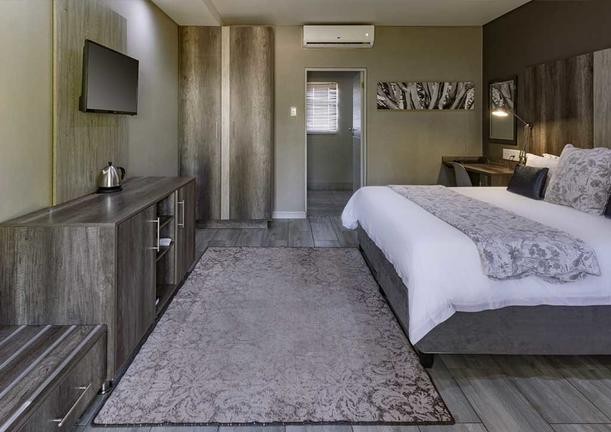
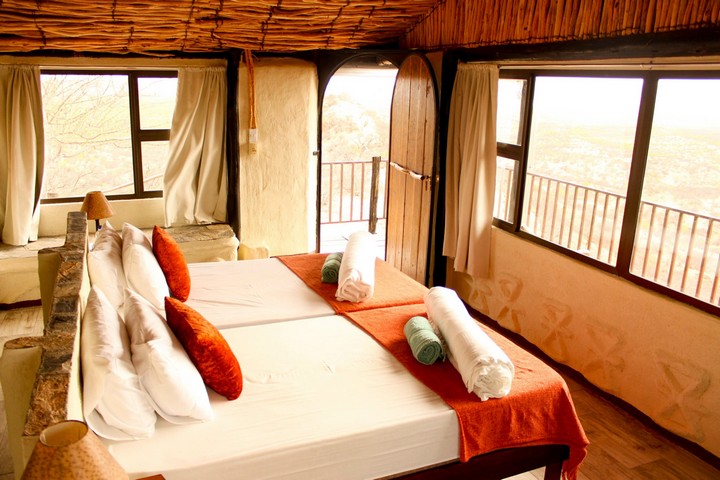
Depending on the style of tour booked, your accommodation arrangements will vary. For Accommodated Tours, although every effort will be made to provide the accommodation as detailed in the itinerary, the operator reserves the right to alter any accommodation listed for one of equal or better standard should the need arise. Accommodation is based on single or twin share or double rooms with private facilities. All establishments are rated three to four star.

For Camping Tours that are fully serviced, the operator provides spacious, comfortable tents accommodating two people each. Each tent is insect proof and equipped with a built-in groundsheet for insulation, as well as two large aerating windows with mosquito netting. Each passenger is provided with a camp bed, mattress, sleeping bag, small pillow, and a comfortable folding safari chair. A dining table is provided for meals, and a comprehensive set of cooking and camping equipment, water containers, and spare parts is carried in the vehicle. Participants need only bring along their personal effects.

Age Limit

There is no strict age policy. Groups are pleasantly informal, usually comprising a wide range of nationalities in the forty to seventy year age group, and tours are aimed at healthy, active participants looking for an adventure holiday. This is purely a guideline; older and younger adventurers will be accepted on request. Clients should satisfy themselves prior to booking that they are fit and able to complete the itinerary of their choice.

Booking Conditions

Please ensure that you are aware of the Booking Conditions, which can be found with the Booking Form. If you do not have a copy, please request one, as your travelling on the safari implies acceptance of these conditions. Should your booking be handled by an Agent or Tour Operator, their Booking Conditions will be applicable.

Binoculars

When visiting wildlife areas, it is essential that participants have a pair of binoculars for their personal use in order to benefit fully from the safari.

Border Crossings

The following border posts are the expected points of entry or departure used for our cross border itineraries. Between South Africa and Namibia, Noordoewer or Rietfontein are used. Between South Africa and Botswana, Pontdrift or Platjan are used. Between South Africa and Zimbabwe, Beit Bridge is used. Between Botswana and Zimbabwe, Kazungula, Pandamatenga, or Plumtree are used. Between Namibia and Botswana, Mohembo or Ngoma are used.

Border and Police Officials

Always be courteous, polite, and patient at border posts or when dealing with police officers and official bureaucrats. An arrogant attitude will only create problems for yourself and for the rest of the group.

Complaints

Should clients have a complaint against the operator, please inform the Tour Leader while on tour so they may attempt to rectify the matter immediately. Should the matter not be resolved on tour, please write to us as soon as possible. The operator must receive the complaint within thirty days of completion of the tour so that the matter may be investigated; claims may not be considered outside that timeframe. The operator will not entertain complaints due to Loss of Enjoyment when the full land arrangements have been successfully provided.

Concept for Camping Tours

Group size is kept relatively small with a maximum of sixteen participants. Our camping tours are Fully Serviced, meaning no participation is required by the clients. The operator’s staff consists of three staff members when there are more than six clients, and two staff members when there are fewer than高度six clients. They erect and dismantle tents and take care of all camp duties, including cooking, washing of eating and cooking utensils, and loading or packing the vehicle. The concept behind the operator’s tour is for guests to sit back and relax while the crew takes care of you. Of course, if clients wish to help out, they are always welcome.

Conservation

Most countries visited are members of CITES, the Convention on International Trade in Endangered Species of Wild Fauna and Flora, which restricts the import and export of numerous species and their products. Please do not purchase products made from ivory or skins, as these may be confiscated by customs.

Please be aware that the purchase of large wooden carvings places a heavy strain on forest resources; we recommend purchasing smaller items instead. In the interest of Wildlife Conservation and Ecotourism, we ask you to completely refrain from purchasing any animal skins, ivory, or any wildlife products. In the interest of protecting the marine environment, please do not damage or touch coral with your hands or feet when snorkelling or diving, such as in Mozambique.

Spending Money and Currency Exchange

We recommend travelling with your local currency like Euros, US Dollars, Australian Dollars, New Zealand Dollars, or British Pounds in cash, as this is the easiest way to exchange into the local currency of the country you are travelling in. Most lodges visited accept credit cards for meals; however, American Express and Diners Club are not readily accepted. We recommend exchanging foreign currency at the bank located at your airport of arrival, or your guide can assist in arranging this upon entry to each country. It is also possible to draw money from ATMs throughout most tours every few days.

In South Africa, South African Rands are used. In Namibia, Namibian Dollars or South African Rands are used. In Botswana, Botswana Pula are used. In Zimbabwe, US Dollars are used at markets and by informal traders, so we recommend bringing small denominations. We recommend using a credit card for most major transactions in Zimbabwe.

Facilities on Safari for Camping

Most campsites we stay at have full facilities such as hot and cold running water, showers, and sit-down flush toilets. However, variations apply in specific remote areas. At Spitzkoppe, we bush camp where no showers are available and there are only long-drop toilets. In Moremi Wildlife Reserve and Savute, we stay in private campsites where the operator provides our own mobile bush toilets and showers. Participants are usually very quick to adapt to these natural safari conditions.

Flight Check-In and Transit Times

Please check in early at airports, at least one to two hours for South African domestic flights, and two to three hours for regional and international flights, as flights are occasionally overbooked. Please be aware that during peak season, delays are often encountered on scheduled flights. A minimum of three to four hours must be allowed for airport transits or transfers, especially at large hubs such as London, Paris, and Johannesburg.

Food, Meals, and Drinks

Meal frameworks differ slightly based on your selected tour type. Accommodated Tours are run on a bed and breakfast basis, with most dinners included on specific itineraries. Lunches are not included, and the tour stops at small cafes, restaurants, or supermarkets to purchase light lunch items. We suggest budgeting approximately five to ten US Dollars for lunch and twenty to thirty US Dollars for dinner per person when meals are not explicitly included. Soft drinks, mineral water, and alcoholic beverages are for the client’s own expense.

Camping Tours serve a continental breakfast consisting of cereals, bread, toast, jams, tea, coffee, hot chocolate, and milk in the mornings. On the Botswana Adventure, a brunch with eggs and bacon is sometimes prepared when in camp after a morning game drive. Lunches are generally not included, prompting stops at local cafes or supermarkets. Dinner is a hot meal often prepared over an open campfire and enjoyed at a lantern-lit table. Note that the main meal is served in the evening. All our meat is pre-purchased in Cape Town, Swakopmund, and Kasane, vacuum-packed, and kept frozen in vehicle freezers.

For general beverage information, teas and coffees are readily available while in camp. Mineral water, soft drinks, and alcoholic beverages are not included but can be purchased en route and kept cold in the onboard fridges. Please feel free to bring along a bottle of your favourite drink or liquor. Please also bear in mind that in remote areas, fresh fruit and vegetables can be difficult to obtain, and during summer from September to April, fresh produce may only keep for two to three days.

Game Drives

Please note that game drives are conducted early in the morning and in the late afternoon. Animals rest and take shelter under the shade of trees during the midday heat. The group will rest and take time off to absorb their surroundings during this period. We do not conduct a continuous, full day of game drives.

Group Size and Rooming

Scheduled tours and safaris run with a group size of between four to sixteen participants. All camping safaris are sold on a sharing basis. If you are a single traveller, we will pair you with another person of the same sex. If you wish to guarantee a private single room or tent, an additional single supplement charge will apply.

Health and Hygiene

All passengers must be in good health before undertaking a safari. We visit remote areas with limited or no medical facilities. If you are on medication of any sort, please ensure you bring a sufficient supply for the duration of your journey, as certain brands may not be available in Africa. Strict hygiene precautions are taken by the crew, but stomach upsets can occasionally arise from changes in water. Do not drink water unless you are sure it is safe. Tap water is safe to drink in major parts of Botswana, Namibia, and South Africa; if you are ever in doubt, please verify with your guide.

Inoculations, Vaccinations, and Malaria

Inoculations and vaccinations, where required, must be obtained in advance prior to departure. It is not possible to obtain these while on safari. Taking malaria tablets is highly recommended but optional; please contact your local doctor or travel clinic for professional advice.

The risk of contracting malaria in Southern Africa is statistically lower during the dry winter period from June to December. Consult your nearest vaccination centre or pharmacist for up-to-date brand recommendations. Several modern anti-malaria tablet brands have notable side effects that can impact your health, particularly if you take other medications or suffer from depression or irregular blood pressure. Most regimes require starting the medication days or weeks before entering a malarial zone. We recommend taking your tablets in the evening to avoid nauseous side effects during the day.

Mosquitoes usually bite between dusk and dawn. The best prevention is active avoidance. Cover up by wearing long sleeves and long pants in the evening. Keep your tent doors and mesh completely zipped closed. Apply an effective insect repellent regularly.

Insurance

Comprehensive travel insurance is compulsory for all passengers travelling on our safaris. It is the client’s sole responsibility to ensure that they carry correct and sufficient comprehensive travel and medical insurance for themselves and any dependants. This insurance must cover, but not be limited to, trip cancellation and curtailment, baggage loss or damage, medical expenses, emergency evacuation or travel, repatriation assistance, and personal accident. It should be taken out prior to leaving your country of residence.

Neither africanoverlandtours.com nor the operator group of companies, its agents, or staff can be held responsible or liable for loss, damage, or theft of personal luggage and belongings, nor for personal injury, accident, or illness. Please be aware that certain optional adventure activities undertaken on tour may not be covered by standard policies; check your policy exclusions carefully. If necessary, insure valuable single items like high-end cameras separately. Always carry a hard copy of your insurance policy with you on safari.

Itineraries and African Conditions

Please note that the route followed is flexible and depends entirely on local conditions. We will do our best to keep to the published itinerary but cannot be held liable for changes beyond our control, or those made in the best interest or safety of our clients and crew. Travelling in Africa is unpredictable; by the very nature of remote travel, there are unforeseen challenges to overcome, and passengers should possess a spirit of adventure. Unforeseen circumstances due to road conditions, weather, mechanical breakdowns, or border delays can change the itinerary. Certain days involve long travel times to cover massive distances. Please come prepared.

Language

Our tours and safaris are conducted in English. Some specific departures may have Italian-speaking translators accompanying the groups.

Local Laws and Customs

We are guests in each country we visit, and it is only good manners that we comply with local customs. All participants are required to obey the laws and regulations of the countries visited. Any passengers contravening local laws may be required to leave the tour immediately with no right to a refund of the tour fare.

Luggage Constraints

Space in the vehicle is strictly limited. For safety and operational reasons, your luggage is restricted to one soft-sided main bag, such as an inexpensive canvas bag or soft duffel, not exceeding twenty kilograms. Wheels are acceptable, but the body must be soft. Rigid suitcases are entirely unsuitable for our safari vehicles. You may also use a frame-less, medium rucksack.

You are also allowed one small daypack or handbag containing money, travel documents, and camera equipment. This will be allowed inside the main cabin, placed by the passenger’s feet. A waist pouch or money belt is also recommended for personal safety.

As an excursion note for the Botswana Adventure, when travelling into Moremi for the two-night, three-day excursion, you must pack down into your small daypack with clothes for those days. Your large main bag will not be taken into the park and will be left securely in the operator’s main vehicle. Excess luggage will be stored at the passenger’s own responsibility and expense.

Maps and Field Guides

To fully appreciate the environment, we highly recommend bringing along reference books such as Roberts Birds of Southern Africa by G L Maclean, Newman’s Birds of Southern Africa by Kenneth Newman, Field Guide to Mammals of Southern Africa by Chris and Tilde Stuart, or Southern Africa Mammals by Robin Frandsen.

Medical Kit

All of our guides have received professional Wilderness First Aid training and carry a comprehensive medical kit on the vehicle. For personal comfort, we suggest bringing a small kit of your own containing plasters, aspirins, paracetamol, throat lozenges, antiseptic cream, insect bite cream, eye drops, anti-malaria tablets, rehydration powders, anti-diarrhoea pills, laxatives, daily toiletries, and any personal prescription medicines.

Mobile Phones and Wi-Fi Connectivity

As a courtesy to other participants on the tour, we request that mobile phones be switched off or silenced during game drives, excursions, meal times, and while moving inside the vehicle. Please restrict phone usage to rest stops. For charging, there are USB points located next to each seat, or a standard South African three-point plug available inside the safari trucks.

Wireless internet is available at most established lodges, but coverage is not continuous throughout the tour. Some areas visited are highly remote and have no cellular connectivity. Where Wi-Fi is available, please expect it to be slow, and it may carry an additional usage charge.

Optional Excursions

During your tour, there will be various optional excursions available. Please note that these optional activities are operated by independent third-party suppliers, not by the operator. Some of these activities involve outdoor adventure and contain an inherent element of risk. You should only participate in activities you feel physically and mentally comfortable handling. Remember to check if your travel insurance covers these specific adventure sports. Optional activities can be pre-booked and pre-paid through your agent, or booked and paid in cash directly to your guide on Day One. In Peak Season from July to October, we highly recommend pre-booking these to avoid disappointment.

Passports and Travel Documents

All travellers require a valid passport. It is the participant’s sole responsibility to ensure that their passport is valid for at least six months after the official end date of the safari and contains a minimum of two consecutive blank pages for visas and entry or departure stamps. If you hold dual citizenship and carry more than one passport, you must use the exact same passport for the entirety of the safari route.

Participants must physically carry a return air ticket to their country of origin or prove possession of sufficient personal funds to purchase one, in order to comply with regional immigration entry regulations.

Personal Safety

The central urban areas of larger towns and cities like Johannesburg, Cape Town, Swakopmund, and Victoria Falls have a criminal element that preys on unwary tourists. Do not walk alone in apparently deserted places; wherever possible, walk with your group. Be alert for pickpockets and bag snatchers, and do not carry more cash than is required. Keep a digital copy or physical photocopy of the first few pages of your passport, visas, and air tickets separate from the original documents.

When visiting wildlife areas, listen closely to your guide. Safety precautions must be taken seriously. Do not walk out into the bush without your guide or approach wild animals closely as it is extremely dangerous. Do not swim in any rivers due to the presence of crocodiles and hippos. Never feed any animals, regardless of how tame or inquisitive they appear. Walking, unless on a pre-arranged guided wilderness walk, is strictly forbidden inside National Parks or Reserves.

Photography

For wildlife and bird photography, a 300mm telephoto lens is highly recommended. Camera batteries are only available in larger cities and tend to be expensive; we advise bringing sufficient spare batteries or external power banks. Participants must not take photographs of border posts, government infrastructure, or military or police points, as this can lead to equipment confiscation or arrest. In most parts of Africa, it is considered respectful to ask permission before taking a photograph of local people, and in many cases, a small payment is expected. Some traditional cultures believe that a camera captures their soul; please respect their beliefs and privacy.

Smoking Policy

For the comfort, health, and safety of our travellers, we enforce a strict no smoking policy inside all of our safari vehicles. On long travel days, regular comfort stops are made en route. As a courtesy to fellow travellers, we also request participants to observe a no-smoking policy during group meal times, and we thank you for your cooperation.

Tour Type Icon

Price From

R5,544

Price Disclaimer: Tour is Priced USD 5544 (July – Dec)

Single Supplement USD 1082

Local Payment R4200

Next Year Tour Priced USD 5940 (Jan – June) | USD 6336 (July – Dec)

Next Year Single Supplement USD 1060

Next Year Local Payment R4200

Price fluctuations occur based on the time of travel. For more information please speak to your travel consultant

check availability View Tour Dates

*Currency estimated. Tours are Based in South African Rand (ZAR) and converted on the day. Some Tours are Based in EUR/USD

Latest
2025 Tripadvisor Travelers Choice:
Best Travel Company for Adventure Holidays

review.io

EXTEND MY TOUR

What are you looking for?

Get advice and suggestions to make this your perfect trip.

or call us on:

+27 (0) 21 448 0997

OTHER VERSIONS OF THIS TOUR

Customize Your Trip With Your Knowledgable Consultants

Chat to our experts to help you plan your dream trip.

  • Providing honest, yet personalised information
  • We have travelled on all the routes
  • Save you hundreds of hours of research
BOOK A FREE MEET UP

Frequently Asked Questions

The Namibian Dollar (NAD) is the official currency and is pegged to the South African Rand, which is also widely accepted.

Zimbabwe is generally safe for guided groups, but certain areas (e.g., Chizarira) are very remote with limited cellular coverage and basic medical access. Insurance that includes emergency evacuation is vital.

Zimbabwe offers several less-traveled but equally rewarding destinations such as Chizarira National Park, Bvumba (Vumba) Mountains, Mount Selinda / Chirinda Forest, Nyanga National Park and the Chinhoyi Caves.

Many nationalities including South African passport holders do not require a visa for stays up to 90 days. However, because overlanding involves multi-region travel, and if you are planning to visit neighbouring countries such as Namibia or Zimbabwe, you may require a double-entry visa. Essentially, it is always best to check the latest visa requirements with the Botswana Embassy or consulate in your country.

Best Overall Months: June to October and January to February

If you’re looking for a sweet spot for both Southern and East Africa, the dry season from June to October and January-February is widely considered the best time to visit. Why?

Dry weather easier travel and fewer mosquitoes

Peak wildlife viewing animals gather around waterholes and are easier to spot

Cooler temperatures  especially pleasant in places like Namibia, Botswana, and Kenya


Southern Africa (South Africa, Namibia, Botswana, Zimbabwe, Zambia)

Best months: May to September

June–August: Excellent for safaris; cool mornings, dry days

September–October: Hotter, but fantastic for wildlife as animals cluster near water

November–April: The green (rainy) season — landscapes are lush, but wildlife is harder to spot and roads can get muddy. Great for birdwatching.

Top pick: July or August — dry, clear, and great for game drives in Kruger, Chobe, and Etosha.


East Africa (Kenya, Tanzania, Uganda, Rwanda)

Best months: June to October and January to February

July–September Prime time for the Great Migration in the Serengeti and Maasai Mara

January–February Short dry season, good for safaris and gorilla trekking

March–May Long rains — travel is still possible, but muddy conditions and wildlife dispersal can be a challenge

Top pick July or August — Great Migration + ideal gorilla trekking conditions in Uganda and Rwanda

Highlight Best Time
Classic safaris June – October
Fewer tourists May or November
The Great Migration (Kenya/Tanzania) July – September
Gorilla trekking (Uganda/Rwanda) June – August, January – February
Victoria Falls at peak flow March – May
Budget travel Green season (November – April)

The expense of exploring Botswana varies greatly on your chosen travel style. Opting for a tailored, private safari will entail a considerably larger investment than joining an overland tour, and each option has its own set of trade-offs. A private guided Botswana safari allows for travel at your own pace, whereas an overland adventure operates within a specific timeline. Nevertheless, the shared cost of an overland tour makes it more economical, earning you more bang for your buck, without sacrificing the opportunity to encounter some of the world’s best wildlife sightings.

Absolutely! Botswana is one of the most sought after destinations in Africa because of its kaleidoscope of wonders. From the life-drenched arteries of the Okavango Delta to the legendary wildlife spectacles within Moremi, Khwai and Chobe, travellers are truly spoiled in this beautiful country. It is also perfect for those looking to explore predator rich areas and birdlife.

Begin your packing list with essential documents: your valid passport, necessary visas, and comprehensive travel insurance. For your Botswana tour specifically, consider bringing lightweight clothing suitable for fluctuating temperatures, comfortable walking/hiking shoes, flip-flops, insect repellent, sunscreen, a headlamp, and a sleeping bag if camping. Other useful items include a reusable water bottle, personal medications, a quick-dry towel, and a retractable washing line. Given the soft-sided luggage requirement and the emphasis on packing light for overland vehicles, it's wise to consult your travel specialist for tour-specific recommendations, ensuring you bring only essential items.

Should you be arriving from or transitioning through a country with a risk of yellow fever transmission, you are required to present a valid yellow fever vaccination certificate, issued at least 10 days before arrival. This is applicable to travellers ages one year and above.

The best way to tour Africa overland depends on your travel style, budget, and how adventurous you’re feeling but the most popular and practical option for most travelers is to join a guided overland tour. Here’s a breakdown of the best options and what to consider:

Join a Group Overland Tour (Most Popular & Hassle-Free)

Why it’s the best for most travelers:

These are pre-organized tours run by professional operators using rugged, expedition-style vehicles. They handle logistics, safety, accommodation, permits, and border crossings — so you can focus on the experience.

Key Features:

Overland truck or 4×4: Purpose-built for Africa’s roads and terrain

Set itineraries: Ranging from 7 days to 60+ days across multiple countries

Accommodation: Options include camping, lodges, or a mix (see: camping vs comfort)

Inclusions: Transport, some meals, park fees, and a crew (guide + driver, sometimes a cook)

Group size: Typically 6–20 travelers

Ideal for: Solo travelers, couples, and anyone who wants a mix of adventure and convenience

Best for first-timers, bucket-listers, or those who want a deep, immersive experience without doing all the planning.

Self-Drive Safari if you have off-road driving experience (Independent & Flexible)

Best for experienced travelers who want full control and don’t mind handling logistics. You can rent a 4×4 (often with a rooftop tent), plot your own route, and camp or stay in lodges. This is only recommended for Southern Africa do to road conditions and safety.

Pros:

Full freedom and flexibility

Ideal for travel in South Africa, Namibia, Botswana (great road infrastructure)

Great for families or friends traveling together

Cons:

Requires planning, confidence, and navigating cross-border rules

Not recommended in some East African countries due to road conditions or safety

Best for: Return visitors, adventurous couples, or travelers with off-road driving experience.  

Absolutely. Overland tours are a fantastic way for solo travelers to meet others and share unforgettable adventures with a friendly, diverse group.

Yes, Namibia is one of the best overland destinations in Africa due to its scenic routes, good roads, safe environment, and stunning natural diversity.

Yes, Namibia is considered one of the safest countries in Africa for travelers. Like any destination, it's best to follow local advice, travel in groups where possible, and keep valuables secure.

English is the official language. You'll also hear Afrikaans, German, and various local languages like Oshiwambo spoken throughout the country.

Namibia is known for its vast desert landscapes, towering red dunes, dramatic coastlines, and wildlife-rich national parks like Etosha. It's a haven for nature lovers, photographers, and adventure seekers alike.

The Small Group Tour (often referred to as the Premium Lodge Tour) has a maximum of 12 guests. This is in contrast to the Classic Camping & Lodge tours which have a maximum of 20 guests on their 24-seater trucks.

Yes to both! Independent adventurers can enjoy trekking, wildlife, and scenic variety and mature travellers can experience historic Rovos Rail journeys through Hwange and to Victoria Falls.

The Cape Town to Victoria Falls tour is offered in both a camping and an accommodated version. On the classic camping & lodge tours, accommodated guests and campers travel together on the same custom-built truck, and meals are prepared by the crew. The main difference is the sleeping arrangement: accommodated guests stay in rooms, while campers use tents.

* Layering Clothes: Bring layering pieces as temperatures can vary wildly—days are warm, but winter nights in Namibia and Botswana can drop below zero.
* Essentials: A buff or scarf is highly recommended for dust and sun protection.
* Footwear: Comfortable walking shoes, trainers, sneakers, or flip-flops are usually sufficient; bulky hiking boots are generally unnecessary unless strenuous hiking is planned.
* Security: A small padlock is needed for your luggage locker in the truck.
* Health: Insect repellent (with DEET) is crucial for malaria prevention, especially at sunset.

More questions? Let the Experts help

LET THE EXPERTS HELP

Travel Advice

14 Things To Do in Cape Town

Cape Town, the mother city of South Africa (as she is affectionately known); is one hip and happening mother. Beautiful white sandy beaches; mountains crossed with hiking trails; spend hours scouring museums and galleries, or shop till you drop at

6 reasons to travel to Zimbabwe

Trying to whittle down a country’s wonders, charms, and unique selling points into a short list is always a bit of a crazy endeavour, but nonetheless, here is my pick of just six reasons to travel to Zimbabwe as a

A beginner’s guide to exploring the Okavango Delta

If you’ve ever dreamed of visiting the Okavango Delta, here’s what you need to know to start planning your adventure The Okavango Delta is the world’s second-largest inland delta. It’s a crucial habitat for thirsty migratory species like elephants as

10 Fascinating Facts about Botswana

Ever heard of a country with elephants for neighbour’s and salt pans like moonscapes? Welcome to Botswana, a treasure trove of fascinating facts just waiting to be discovered! While we can speak about this incredible destination for hours, we thought

Finding the Soul of Namibia in Damaraland

In Damaraland, the earth holds and breathes history. This is a realm of profound humming silence, where time layers itself into a rust-red chronicle of the ancient world. Cradled in Namibia’s wild heart, between the shimmering mirages of Etosha and

10 Fascinating Experiences to tick off in Namibia

If we do say so ourselves; Namibia has to be one of the most underrated places in all of Africa! Not many people are aware of the incredible experiences hidden in this majestic corner of the continent. Namibia isn’t all

Sossusvlei

A popular tourist destination, Sossusvlei is a salt and clay pan encircled by looming scarlet dunes that lies in the southern portion of the Namib Desert, in the Namib-Naukluft National Park of Namibia. Sossusvlei is frequently used to define the

Namibia

About Namibia Wedged between the South Atlantic and the Kalahari, the beautiful Namibia harbours the world’s oldest desert, the highest sand dunes, and one of the most notorious coasts to shippers, aptly named Skeleton Coast. It’s one of the world’s

A Perfect African Sunrise

“How tough could it be” I think to myself as I’m snuggly warm in my sleeping bag, dreading getting out into the cold morning air, and could hear our tour leader doing her rounds to wake up her weary troops.

Etosha National Park, Why I love Namibia

After doing safaris all over southern and east Africa, Etosha National Park in Namibia remains one of my favourite National Parks. From the moment that I drove through the Von Lindequist Gate, at the park’s eastern entrance, and spotted a giraffe

Swakopmund

Swakopmund, or ‘Mouth of the Swakop’, is a city located in the Namib Desert, on the north-west of Namibia’s coast. The city is situated 280 kilometres west of the capital of Namibia, Windhoek, and is the capital of the Erongo

Reviews

Price From

R5,544

20 Day Victoria Falls to Cape Town Tour (Premier)

https://africanoverlandtours.com/wp-content/uploads/2025/05/Botswana-Mokoro-01.jpg

Brochure Image

Explore our african overland tour brochure

request a brochure
Request a Brochure

"*" indicates required fields

This field is for validation purposes and should be left unchanged.
Full Name*

ready to explore more?

Our travel experts are ready to start creating your tailormade trip.
Secret Link